


Auto AC Repair & Recharge
- AC diagnostics to evaluate cooling performance and identify mechanical or electrical faults.
- AC recharge to restore the specified refrigerant level after evaluating the system.
- AC leak detection and repair for leaking hoses, seals, connections, and other components.
- Compressor and condenser service for damaged or failing cooling components.
- Electrical and climate control diagnostics for fuses, relays, fans, and control problems.
- Cabin air filter replacement when a restricted filter reduces airflow.
A recharge restores refrigerant. It does not repair a leaking hose, failed compressor, or electrical fault.
What Does Auto AC Repair & Recharge Include?
Eagle Transmission & Auto Repair provides auto AC repair and recharge to address warm air, weak cooling, refrigerant leaks, and failed AC components.
Auto AC service includes diagnosing cooling problems, repairing the cause, and restoring the correct refrigerant charge when needed. Eagle Transmission & Auto Repair offers these related services:
AC diagnostics to evaluate cooling performance and identify mechanical or electrical faults.
AC recharge to restore the specified refrigerant level after evaluating the system.
AC leak detection and repair for leaking hoses, seals, connections, and other components.
Compressor and condenser service for damaged or failing cooling components.
Electrical and climate control diagnostics for fuses, relays, fans, and control problems.
Cabin air filter replacement when a restricted filter reduces airflow.
A recharge restores refrigerant. It does not repair a leaking hose, failed compressor, or electrical fault.
How Do You Know Your Vehicle Needs AC Service?
Warm air, weak airflow, unusual noises, or cooling that fades after a recharge are signs your vehicle needs an AC inspection. Symptoms help guide testing, but they do not identify the failed part on their own.
Look for these changes:
- Warm or barely cool air from the vents when AC is selected.
- Reduced airflow even with the fan set higher.
- Cooling that becomes inconsistent during a drive.
- New squealing, rattling, or grinding sounds when the AC operates.
- Persistent musty odors from the vents.
- Cooling that improves after a recharge but soon becomes weak again.
Eagle Transmission & Auto Repair can evaluate these concerns before recommending AC work. Weak airflow may involve the cabin filter or blower system, while warm air can have refrigerant, compressor, or control-related causes.
What Happens During the Auto AC Repair Process?
Auto AC repair starts with diagnosis, followed by an estimate, approved repairs, and a cooling-performance check. The work required depends on the vehicle and the test results.
01
Review the symptoms
Explain when cooling changes, whether noises occur, and whether the system has been recharged recently.
02
Test the system
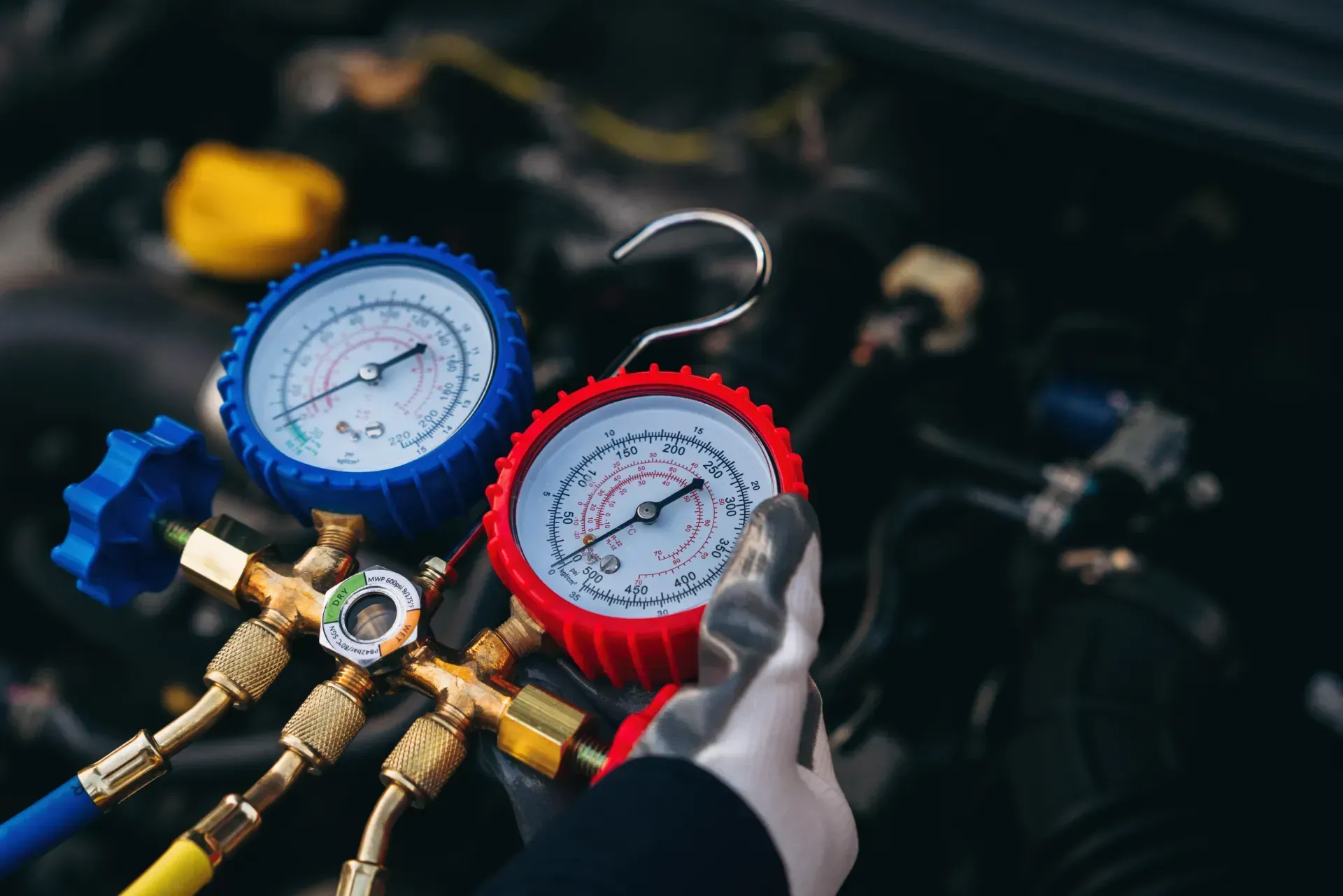
Evaluate vent temperature, airflow, operating pressures, and relevant electrical controls.
03
Locate the fault
Check for refrigerant leaks and inspect components that could explain the symptoms.
04
Review the estimate
Discuss the recommended repairs, parts, refrigerant service, and expected completion time before authorizing work.
05
Complete the approved service
Repair the identified problem. When recharging is required, recover refrigerant, evacuate the system as appropriate, and add the manufacturer-specified refrigerant charge.
06
Verify performance
Recheck cooling, airflow, and system operation after the service.
How Much Does Auto AC Repair & Recharge Cost?
Auto AC repair cost depends on the diagnosis, required parts, labor, and refrigerant service. A recharge without additional repairs generally costs less than replacing a major AC component. Contact Eagle Transmission & Auto Repair for a vehicle-specific estimate.
| Service or repair | Relative cost | What changes the price |
|---|---|---|
| AC recharge | Generally lower without repairs | Refrigerant type, charge capacity, and testing required |
| Hose or seal leak repair | Varies by leak location | Replacement parts, access, and recharge requirements |
| Compressor or condenser replacement | Usually higher than a recharge | Part selection, labor, and related system work |
| Evaporator replacement | Can involve substantial labor | Dashboard access and vehicle design |
| Electrical or airflow repair | Varies by diagnosed fault | Testing time and the component requiring repair |
Vehicle make, model, and year affect parts and access. Refrigerant type and quantity also affect the estimate. Ask whether the quoted total includes diagnosis, parts, labor, refrigerant, and any applicable fees or taxes.
Auto AC repair cost depends on the diagnosis, required parts, labor, and refrigerant service. A recharge without additional repairs generally costs less than replacing a major AC component. Contact Eagle Transmission & Auto Repair for a vehicle-specific estimate.
Why Choose Eagle Transmission & Auto Repair for AC Service?
Eagle Transmission & Auto Repair combines AC diagnostics and repairs with full-service automotive experience, free initial checks, and multiple payment options.
- More than three decades in the automotive and transmission repair business.
- A free initial check to begin evaluating AC concerns.
- Refrigerant service, leak repairs, component replacement, and electrical diagnostics available through one repair center.
- Multiple payment and financing options for customers planning repairs.
Frequently Asked Questions
Why is my car AC blowing warm air?
Warm air commonly results from a refrigerant leak, failing compressor, faulty blend door, or cooling fan problem. Electrical faults can also prevent the AC from operating.
Eagle Transmission & Auto Repair can identify the cause and determine whether your vehicle needs a recharge, repair, or both.
How often does a car AC need to be recharged?
A properly functioning AC system should not need frequent recharging because refrigerant circulates through a closed system. Low refrigerant means it has escaped, so the system should be checked for leaks. Repairing the leak before recharging helps prevent the cooling problem from returning.
What are the signs of a failing AC compressor?
Common signs include loud clicking, grinding, or squealing noises, warm air, and inconsistent cooling. A compressor clutch that fails to engage can also indicate trouble. A brief click during normal engagement is expected, so unusual noises and poor cooling should be tested before replacing the compressor.
How much does it cost to fix a car AC leak?
AC leak repair costs depend on the leak’s location, replacement parts, and labor required.
- Diagnostic costs cover testing to locate the leak.
- Repair costs cover parts, labor, and any necessary refrigerant service.
An accessible hose or seal usually costs less to repair than an evaporator behind the dashboard. Eagle Transmission & Auto Repair offers a free initial check; ask whether detailed leak testing carries an additional fee.
Why does my car AC smell like mildew?
A mildew smell usually comes from moisture that allows mold or bacteria to grow around the evaporator core. A dirty or damp cabin air filter can also contribute.
Checking the filter, evaporator, and condensate drain helps identify whether cleaning, filter replacement, or drainage repairs are needed.
Can a bad AC compressor affect the engine?
Yes. A failing belt-driven compressor can create excessive engine drag and strain the serpentine belt. If the compressor or pulley seizes, the belt can slip or break.
Depending on the vehicle, that belt may also drive the alternator, water pump, or power-steering pump, affecting other essential systems.